



AI-Powered Advertising in 2026: How Google Ads & Meta Ads Are Becoming More Automated
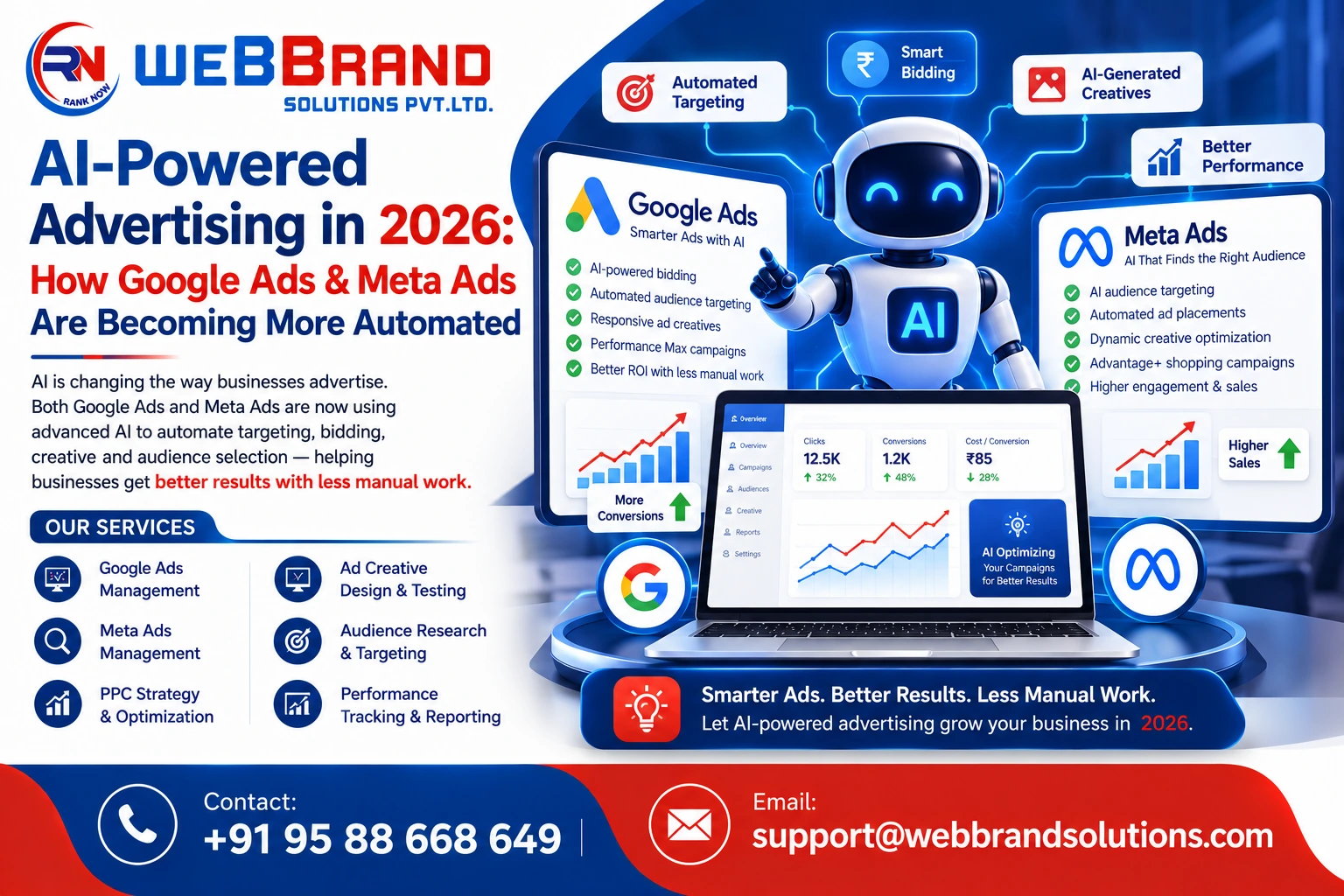
Digital advertising is changing rapidly in 2026. Artificial intelligence (AI) is helping businesses automate ad targeting, bidding, budget allocation, creative generation, and campaign optimization. Instead of managing every setting manually, marketers can use AI-powered tools to make faster, data-driven decisions.
Platforms like Google Ads and Meta Ads are moving towards smarter automation—but human strategy remains essential for profitable advertising.
What Is AI-Powered Advertising?
AI-powered advertising uses artificial intelligence and machine learning to improve how ads are created, targeted, delivered, and optimized. It helps advertisers identify potential customers, test creative variations, and allocate budgets according to campaign goals.
For businesses, this can reduce repetitive work and make campaign management more efficient. However, results still depend on accurate tracking, relevant creatives, and a clear marketing strategy.
How Google Ads Is Using AI in 2026
Google Ads is increasingly using AI to help advertisers reach relevant audiences and optimize campaign performance.
Smart Bidding: Uses Google AI to adjust bids for conversion or conversion-value goals.
Performance Max: Helps advertisers reach customers across Google’s advertising channels through automated campaign optimization.
AI Max for Search: Expands search campaign capabilities with AI-powered targeting and creative features. Google has also announced changes to how certain legacy search campaigns will transition to AI Max.
These features can help businesses discover new opportunities, but advertisers should monitor search relevance, conversion quality, and spending.
How Meta Ads Is Becoming More Automated
Meta Ads is also expanding AI-driven campaign management across Facebook and Instagram.
Advantage+: Automates elements of audience selection, placements, and campaign delivery.
AI Creative Tools: Help generate or adapt advertising images, videos, and text variations.
Automated Optimization: Uses campaign signals to improve ad delivery towards selected objectives.
Meta’s 2026 updates highlight continued investment in AI-powered creative tools and advertising recommendation systems.
For businesses, automation can make it easier to test different messages and reach potential customers. However, every AI-generated asset should be checked for accuracy, brand consistency, and policy compliance.
AI Advertising: What Should Businesses Automate?
| Automate with AI | Keep Human Oversight |
|---|---|
| Bid adjustments and delivery optimization | Marketing goals and budget limits |
| Testing creative variations | Brand voice and creative approval |
| Audience and placement optimization | Customer understanding |
| Performance insights and reporting | Strategy and business decisions |
| Routine campaign tasks | Lead quality and return on investment |
The key takeaway: AI can optimize campaign execution, but it cannot replace a clear understanding of your customers, offer, and business goals.
How to Prepare Your Business for AI Advertising
Businesses can get more value from automated ads by following these practical steps:
Set clear objectives: Decide whether you want qualified leads, online sales, website traffic, or brand awareness.
Track conversions correctly: Configure conversion tracking and analytics before increasing ad spend.
Provide quality creatives: Use relevant images, videos, headlines, and calls to action.
Feed AI reliable data: Where appropriate and consented, use accurate conversion and customer data to support optimization.
Review performance regularly: Measure cost per qualified lead, conversion rate, customer acquisition cost, and return on ad spend (ROAS).
Remember, automation does not guarantee lower costs or better results. Test changes carefully and evaluate actual business outcomes.
Frequently Asked Questions (FAQs)
1. What is AI-powered advertising in 2026?
AI-powered advertising uses machine learning and generative AI to automate and improve ad targeting, bidding, creative development, and campaign optimization.
2. Is Google Ads becoming fully automated?
No. Google Ads offers increasingly automated campaign features, but advertisers still need to set goals, provide assets, configure tracking, manage budgets, and review performance.
3. What is the difference between Google Ads AI and Meta Ads AI?
Google Ads AI helps advertisers reach people across Google Search and other Google advertising channels. Meta Ads AI optimizes ad delivery across Meta platforms, including Facebook and Instagram. Both use automation, but their audiences, placements, and campaign objectives differ.
4. Is AI advertising suitable for small businesses?
Yes. Small businesses can use automated advertising tools, provided they have clear goals, an appropriate budget, accurate tracking, and a relevant offer.
5. Will AI replace digital marketing professionals?
AI is automating more routine tasks, but strategy, creativity, customer understanding, measurement, and decision-making remain important human responsibilities.
Conclusion :
AI-powered advertising is making Google Ads and Meta Ads smarter and more automated in 2026. Businesses that combine AI tools with strong creative strategy, accurate tracking, and regular performance reviews can make more informed advertising decisions.
Want to improve your digital advertising strategy? WebBrand Solutions helps businesses build data-driven digital marketing strategies, improve online visibility, and generate quality enquiries.
Explore our services: RN WebBrand Solutions Pvt. Ltd.